EQUIDISTANCE SURFACE, SYMMETRY SET, SKELETTON


| next surface | previous surface | 2D curves | 3D curves | surfaces | fractals | polyhedra |
EQUIDISTANCE SURFACE, SYMMETRY SET, SKELETTON
| Other names: mediatrix surface. |
Obtaining the equation of the equidistance curve: eliminate  from
from  .Particular
case of a surface and a plane: .Particular
case of a surface and a plane:  ; alors
  avec
avec  . . |
 |
The equidistance surface between two surfaces  and
and  is the locus of the points M located on a normal at M1
to
and on a normal at M2 to
with MM1 = MM2
. This is the generalisation to 3 dimensions of the equidistance
curve of 2 curves.
is the locus of the points M located on a normal at M1
to
and on a normal at M2 to
with MM1 = MM2
. This is the generalisation to 3 dimensions of the equidistance
curve of 2 curves.
Therefore, it is also:
- the locus of points located on two
parallel
surfaces respectively to the two surfaces, at the same distance.
- the locus of the centres of the
spheres tangent to both surfaces.
Examples:
- the equidistance surface of two parallel curves
is yet another parallel surface.
- the equidistance surface of two
surfaces symmetric about a plane is a portion of that plane (for example,
the equidistance surface of two secant planes is composed of the two bisector
planes).
- the equidistance surface of a sphere
and a plane is composed of one or two paraboloids; writing F the
centre of the circle, R its radius, P the line, then the
equidistance curve is defined by  where
H
is the projection of M on P. The focus of the paraboloid
is F and their directrix plane is parallel to P.
where
H
is the projection of M on P. The focus of the paraboloid
is F and their directrix plane is parallel to P.
| Various cases: disjoint, tangent, or secant sphere and plane. | 
The second paraboloid is not traced. |
 |
 |
- the equidistance surface of two circles
is composed of two bifocal quadrics; Writing (centre,radius) of the circles
as (F,R) and (F',R') respectively, the equidistance surface
is defined by  .
.
These two quadrics are..
| ...two ellipsoids when one of the surfaces is inside the other: |  |
...an ellipsoid and a plane when one of the sphere is inside the other and tangent to it: |
 |
| ...an ellipsoid and a hyperboloid when the spheres are secant: |  |
...a hyperboloid and a plane when the spheres are tangent and outside one another: |
 |
| ...two hyperboloids when the spheres are outside one another |  |
Opposite, the equidistance surface of a plane and
a paraboloid.
Algebraic curve of degree 6. |
 |
| Equidistance surface between an ellipsoid and a plane.
The red surface is the locus of the centers of spheres tangent to the plane and, externally, to the ellipsoid; the purple surface is the locus of the centers of spheres tangent to the plane and, internally, to the ellipsoid. |

Realisation : Alain Esculier. |
| If a nephroid is rotated around its vertical axis, the surface of equidistance of this surface of revolution with the plane passing through the circle of cusps is a sphere. |  |
 |
We can consider cases where the two surfaces are one. The equidistance surface, which then takes the name of the symmetry set, is the locus of the centers of the bitangent (or multitangent) spheres to the surface, and therefore also the locus of the points where the parallel surfaces intersect themselves.
Examples:
| The symmetry set of an ellipsoid is is formed of three
filled ellipses, two by two orthogonal.
For the ellipsoid |
 |
| The symmetry set of the envelope of a family of spheres is the locus of the centres (but, be careful, some spheres may have an imaginary contact with the surface: their centre will not be counted in the real symmetry set); for example, the symmetry set of an anallagmatic surface is its deferent. |
The notion of mediatrix set of two subsets of the plane
is similar to that of equidistance surface. It is the set of points at
equal
distance from the two subsets (the distance to a set
being the infimum of the distances to a point in said set); when the two
subsets are curves, the mediatrix is in
general included in the equidistance surface.
| Here is, for example, the mediatrix set of two secant spheres, always composed of an ellipsoid, but the hyperboloid of which has only one sheet: |
 |
The notion similar to that of symmetry set is therefore
the skeleton of a compact subset X of the space, which is
the closure of the set of centres of the maximal disks contained in the
subset (a maximal ball is a ball that is not included in any other disk).
| The skeletton of a full ellipsoid ia a full ellipse.
View opposite with a bitangent sphere at the boundary.
|
 |
| For a full convex polyhedron, the skeleton is composed
of portions of bisector planes of couples of faces, delimiting the "attraction
zones" of each face (locus of the points of the polyhedron that are closer
to this face than to the others).
Here are for example the skeletton of a rectangular cuboid, and the skeletton of a full tetrahedron, composed of the six full triangles that join the center of the insphere to the edges. |
 |
 |
| The notion can be extended to the case where X is any subset; for example, if X is the complement of a finite subset Y, the skeleton is composed of the boundaries of the Voronoi cells associated to the points of Y. |  |
| surface suivante | surface précédente | courbes 2D | courbes 3D | surfaces | fractals | polyèdres |
© Robert FERRÉOL 2026
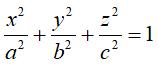 ,
the semiaxes of the ellipses are:
,
the semiaxes of the ellipses are:
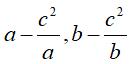 ,
,
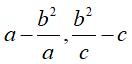 ,
,
 .
.